
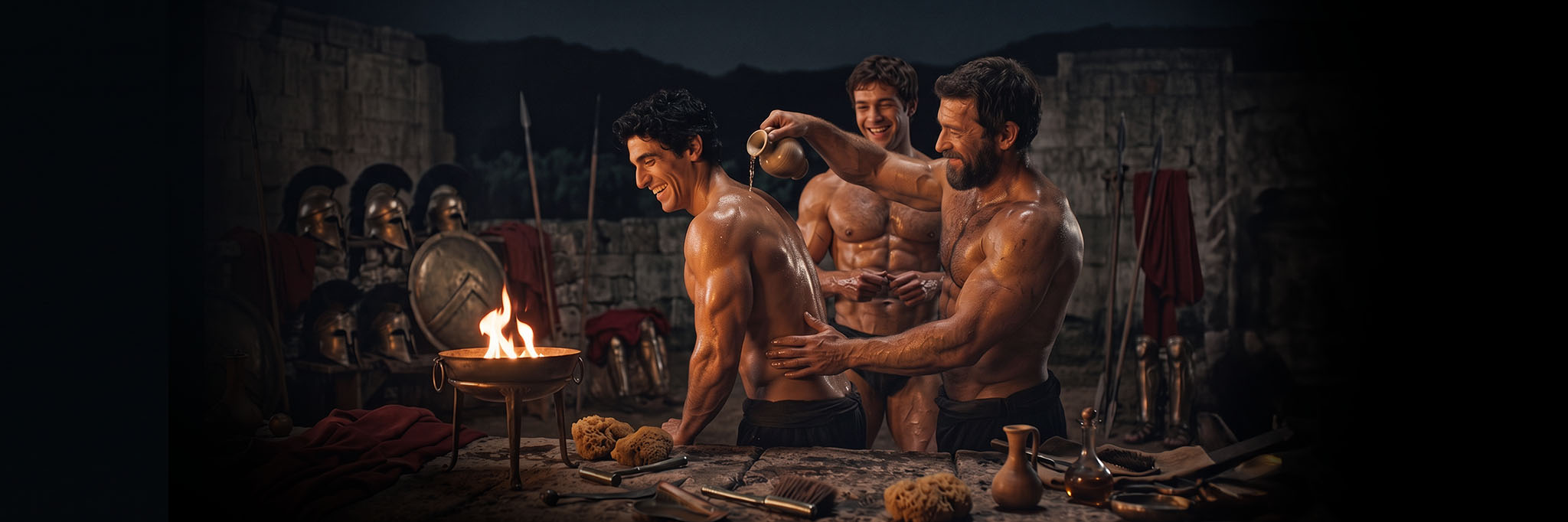
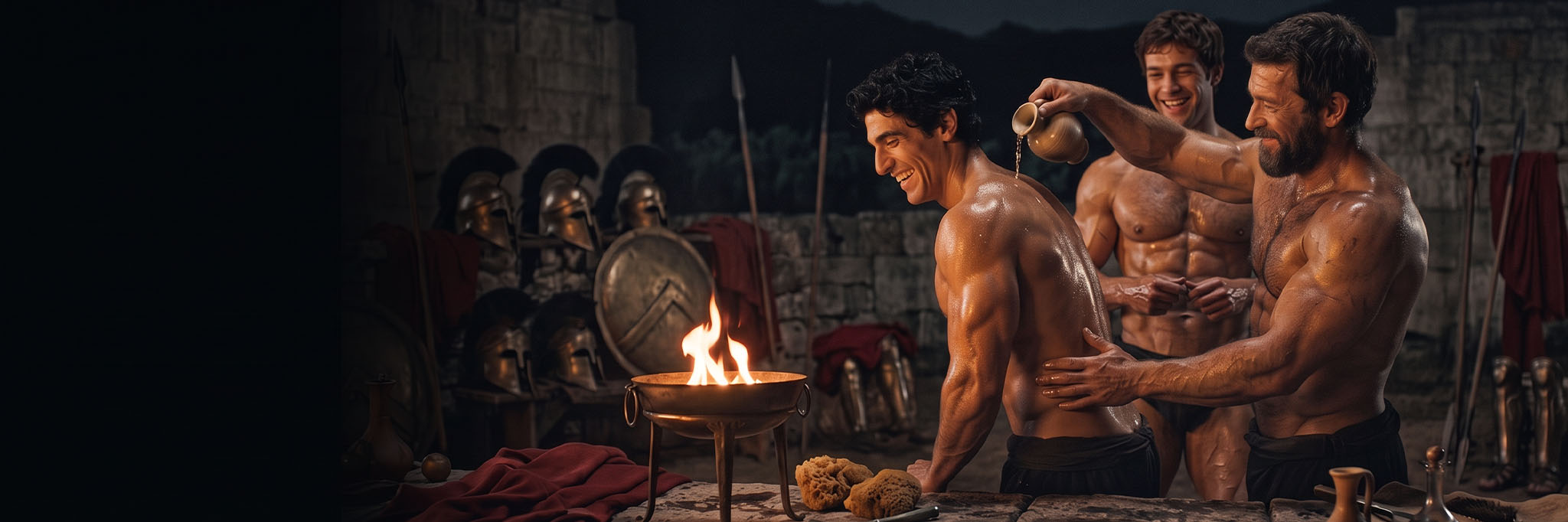
There’s something about Ancient Greece that still gets gay men’s attention more than 2,000 years later: warriors, athletes, gods and heroes — preferably muscular and lightly dressed.
We see it ourselves. Whenever we publish videos with Greeks, Romans and muscled warriors, the clicks go through the roof. Apparently, give a man a sword and a six-pack and suddenly everyone loves history.
But how gay was Ancient Greece really? Greek mythology is full of gods and heroes falling for other men. This time, though, we’re looking beyond the myths. From naked athletes to Spartan warriors and an entire army of boyfriends, let’s see what history actually tells us.
The Naked Olympics
If you think the Greeks looked good in their statues, here’s a little surprise: at the ancient Olympic Games, male athletes actually competed just like that. Completely naked. And covered in olive oil.
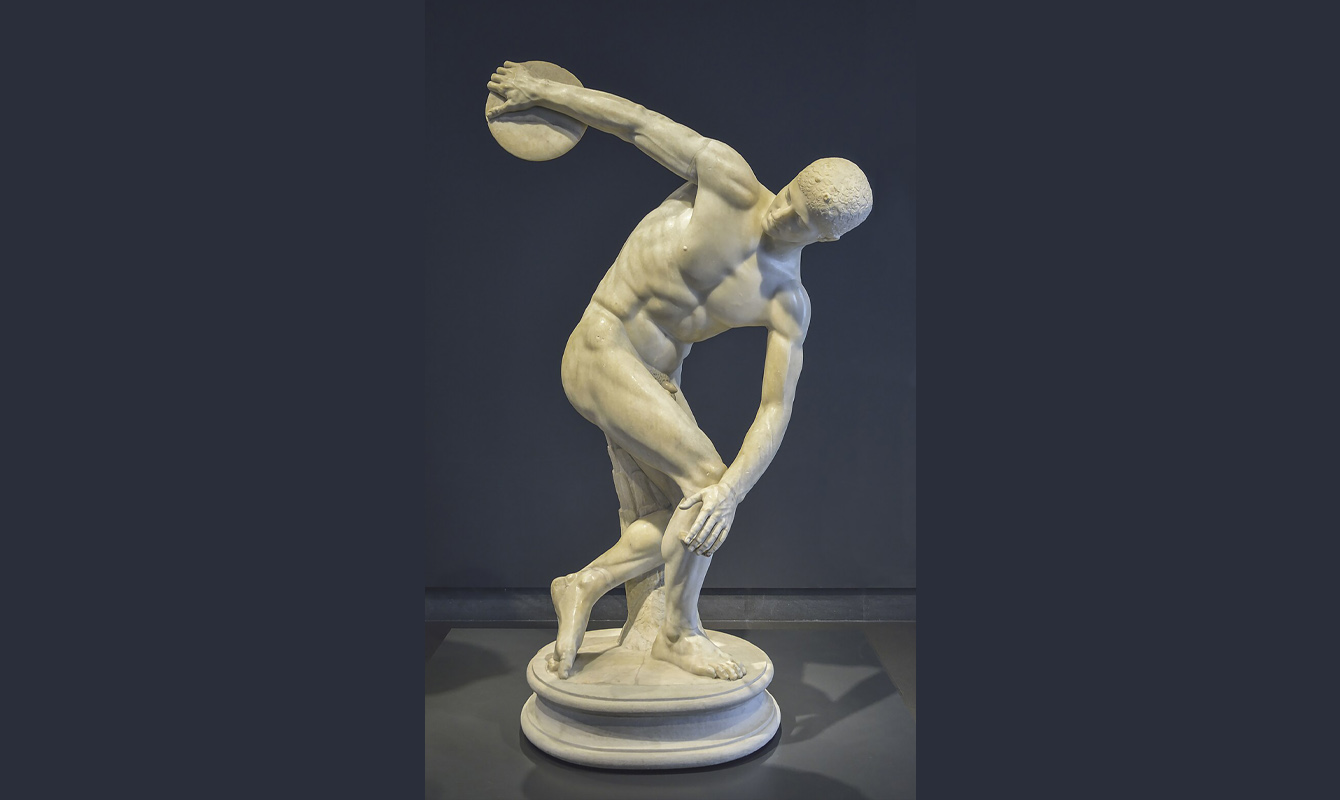
The Discobolus (Discus Thrower), a Roman marble copy of the 5th-century BCE sculpture by Greek artist Myron, displayed at the National Roman Museum, Palazzo Massimo alle Terme, Rome (Italy). Photo: Livioandronico2013 / Wikimedia Commons, CC BY-SA 4.0.
No shorts, no sportswear. Just naked men running, wrestling and throwing discs, their muscular bodies rubbed with olive oil before competition. Yes, the Ancient Greeks really knew how to put on a show.
For the Greeks, the athletic male body represented strength, discipline and beauty. Muscles weren’t just attractive — they were something to admire and celebrate. Victorious athletes became local heroes, inspiring sculptures and works of art.
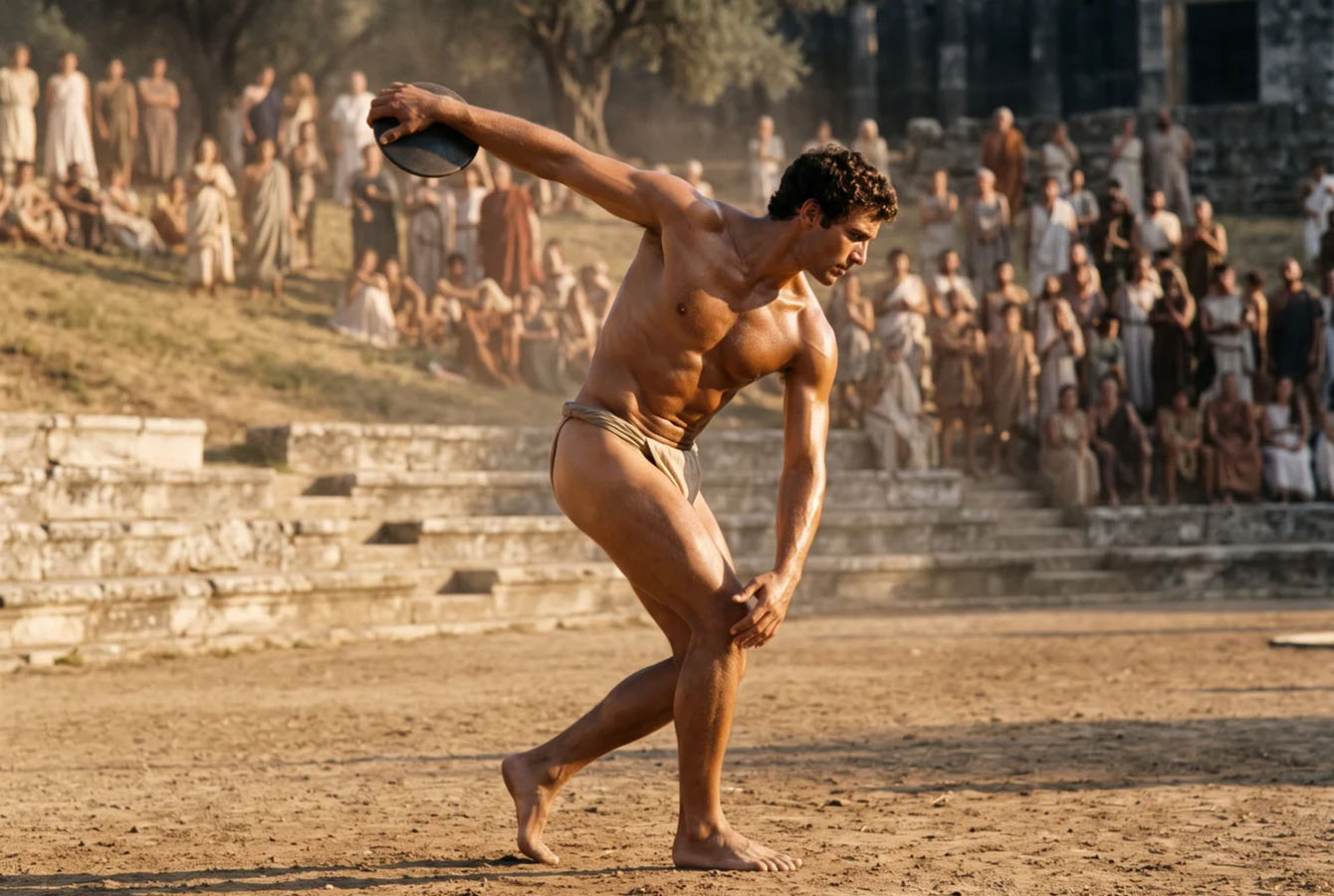
Discus throwing was one of the five events of the ancient Olympic pentathlon. While athletes competed wearing nothing but olive oil, our AI unfortunately has a dress code.
The Olympics weren’t necessarily organised for gay spectators. But thousands of years later, we can certainly appreciate the view. Does anyone else think it’s time to bring this tradition back?
Sparta: More Than Brothers in Arms
You’ve probably seen the film “300”: muscular warriors, red capes, six-packs and plenty of shouting. Hollywood certainly knew how to make Spartans look good.
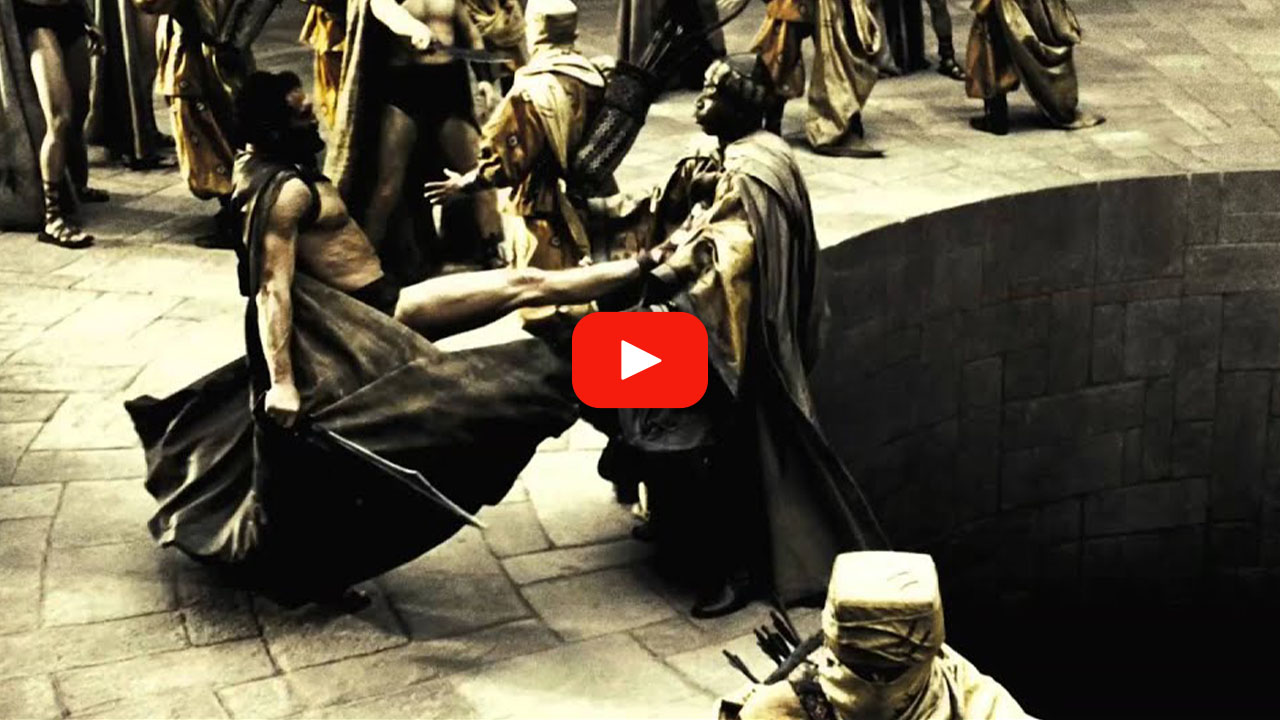
Sparta, Hollywood-style. Watch the trailer for “300” (2007) — plenty of muscles, drama and historical liberties.
But the real Sparta was a much harsher place. Unlike Athens, with its grand temples and monuments, Sparta was spread across several modest settlements. Architecture wasn’t exactly its claim to fame. Its reputation was built on something else entirely: its warriors.
Boys underwent rigorous military training from a young age, learning discipline, obedience and loyalty to the state. All within a society heavily dependent on slavery and violence. Not exactly paradise.
Still, there was another side to Spartan life: the close bonds between older male mentors and their younger protégés.
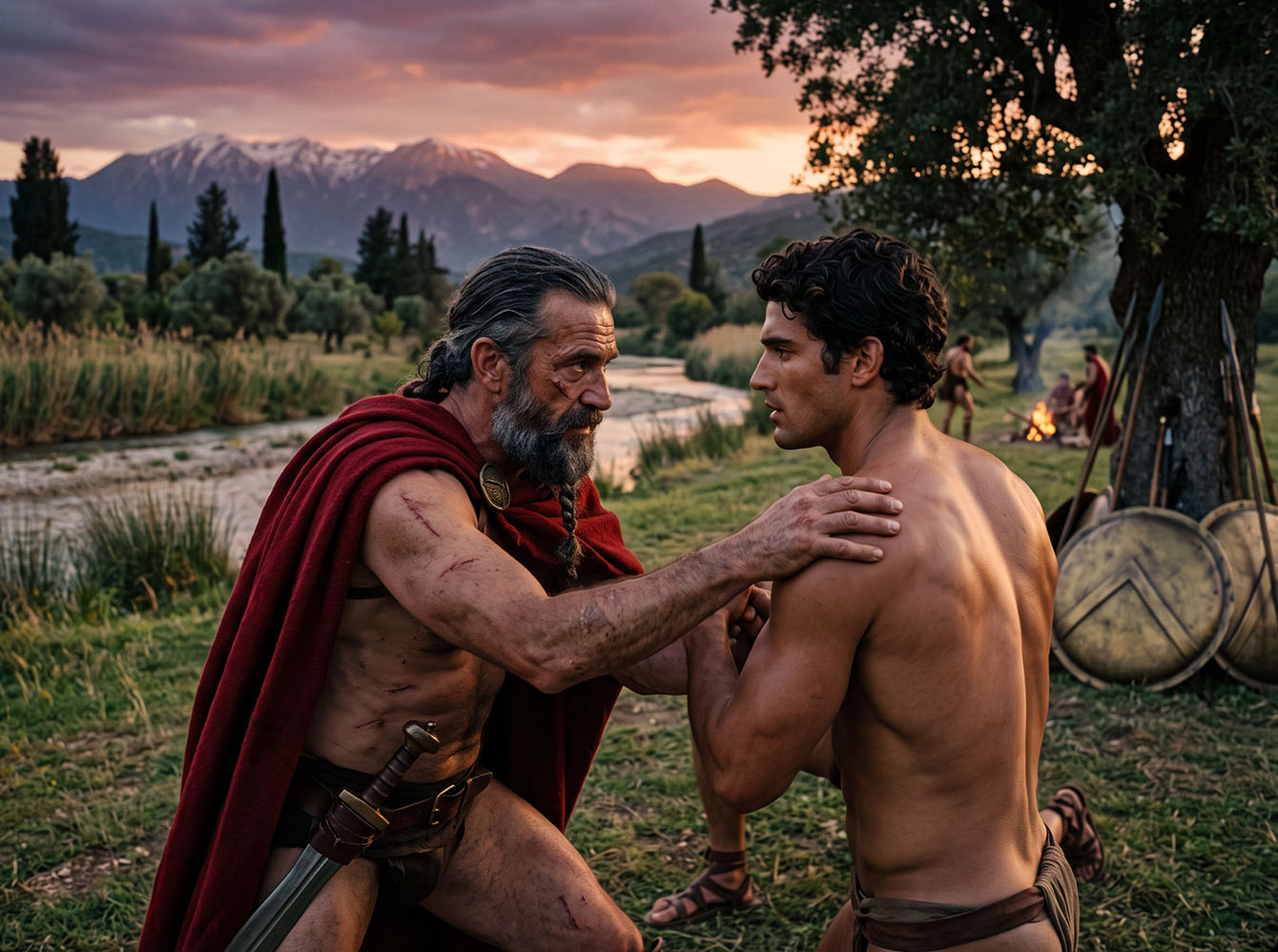
Our AI take on a Spartan mentor and his young apprentice. Lessons in combat, loyalty… and lots of chemistry.
These relationships were meant to teach courage, discipline and loyalty. But was there also romance or sexual attraction involved? Ancient writers disagreed, with some describing them as educational and others openly mentioning love between men.
We even have historical examples. Plutarch described the powerful Spartan commander Lysander as the lover of young Agesilaus, who would later become king of Sparta. And guess who helped him take the throne? Lysander himself. Talk about supporting your man!
So yes, Sparta had its share of male affection. But another Greek city took the idea of fighting for the man you loved to a whole new level.
Lovers in Arms
Gay men in the military? In our modern society, that idea has caused plenty of controversy. But Ancient Thebes had a rather different approach: what if fighting alongside the man you loved actually made you a better soldier?
In the fourth century BCE, Thebes created the Sacred Band, an elite unit of 300 warriors, traditionally described as 150 pairs of male lovers.
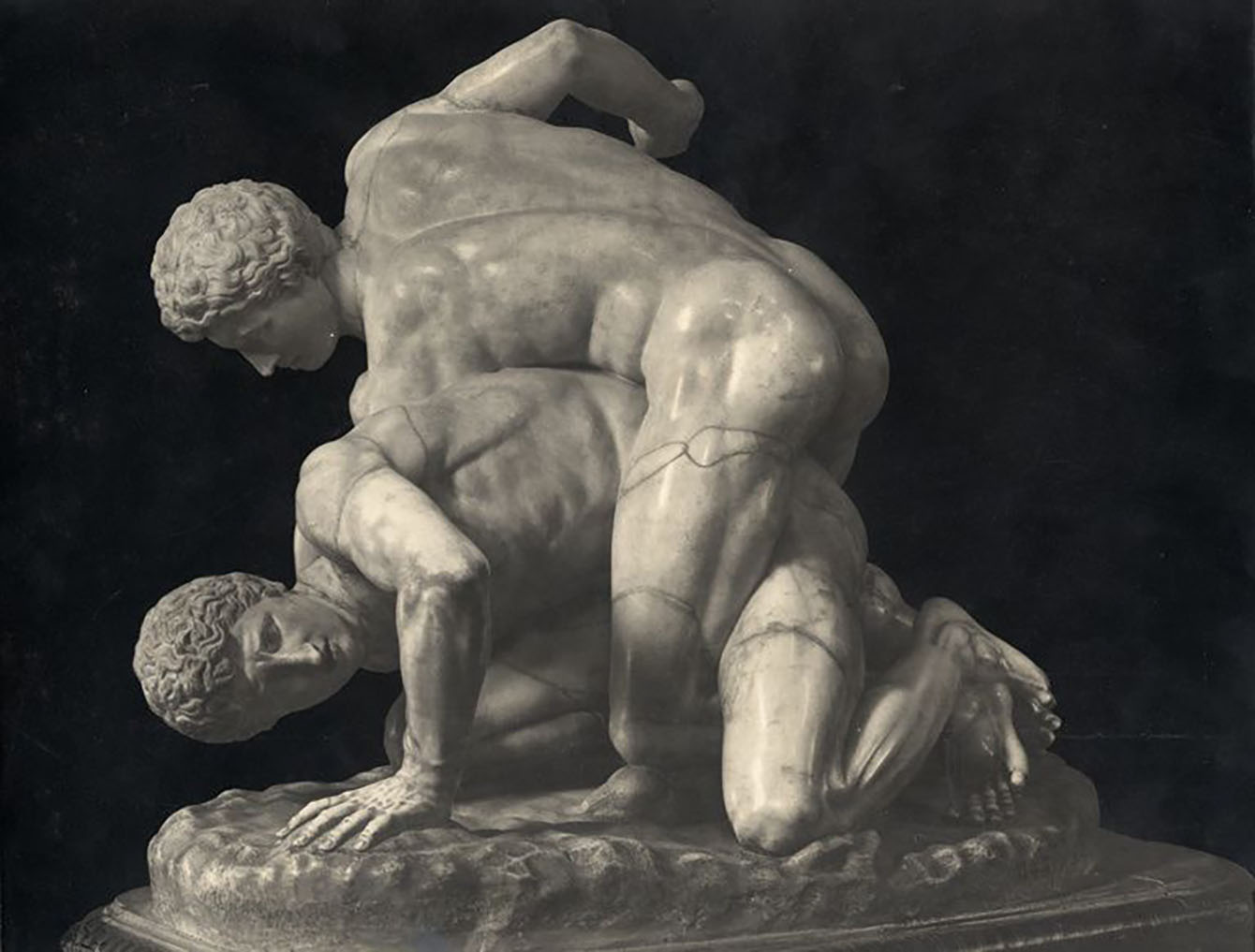
The Wrestlers, a Roman marble copy of a Greek sculpture from the 3rd century BCE attributed to Lysippos, on display at the Uffizi Gallery, Florence (Italy). Fighting or flirting? We’ll let you decide. Photo: Wikimedia Commons.
The idea was simple: nobody wanted to look cowardly in front of their man, and each would fight fiercely to protect the other.
And apparently, it worked extraordinarily well. In 371 BCE, the Sacred Band helped defeat the powerful Spartans at the Battle of Leuctra.
The wider Theban army was led by Epaminondas, a brilliant general whose love life was rather interesting too. Ancient writers mention several male lovers, including Caphisodorus, with whom he shared a particularly tragic ending.
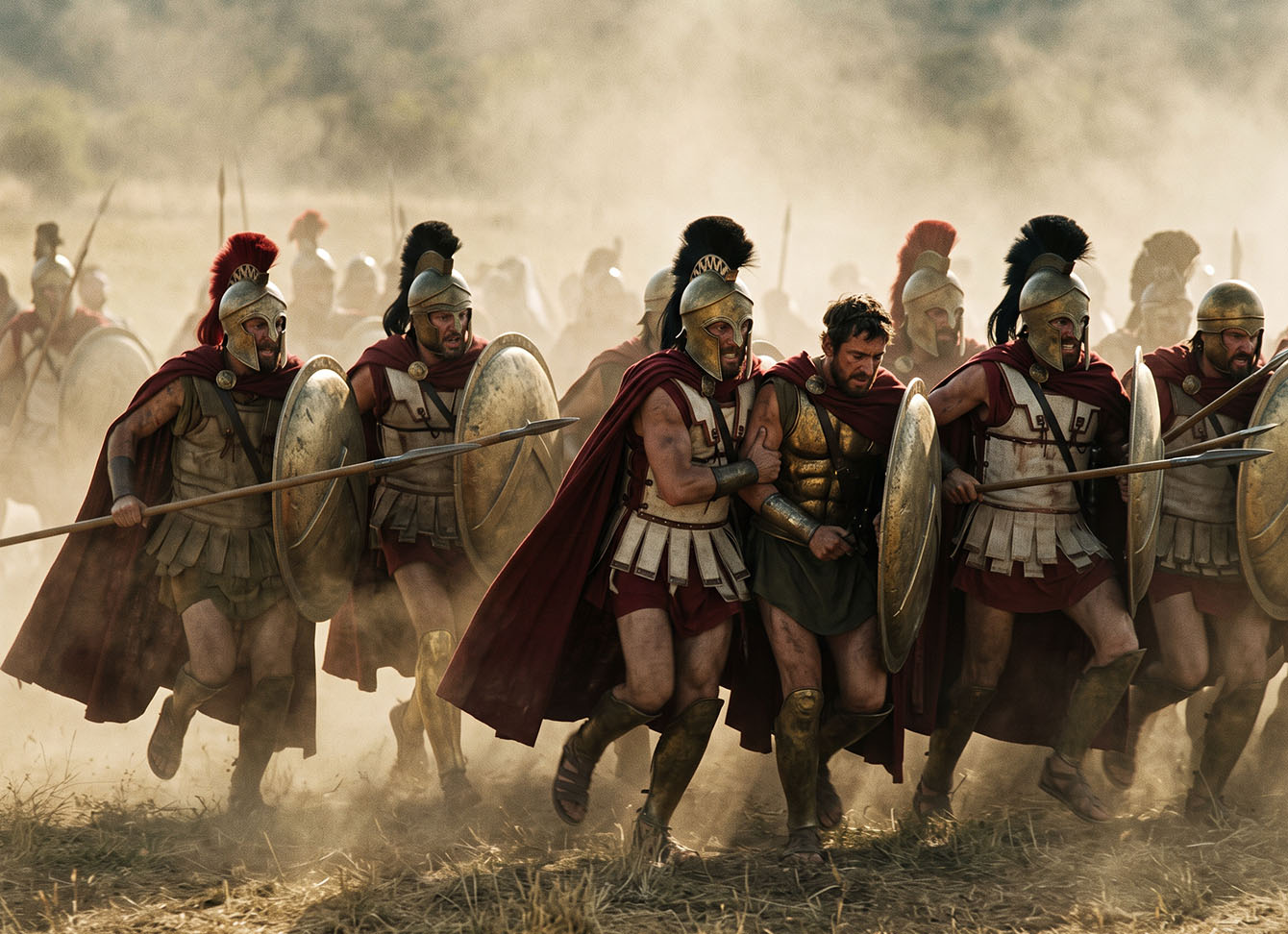
The Sacred Band of Thebes, reimagined with AI. No man left behind, especially when he’s your man.
Nine years after that famous victory, both men died fighting at the Battle of Mantinea. According to Plutarch, they were buried close to one another. Together in battle, and close even in death.
The Sacred Band continued fighting until 338 BCE, when the Macedonian army of Philip II finally defeated them at Chaeronea. According to Plutarch, Philip was so moved by the fallen warriors and their relationships that he burst into tears.
Even their enemy couldn’t help but admire an army whose courage was built around love.
A Crush for the Ages
So, was Ancient Greece really as gay as we like to imagine?
Well, the Greeks didn’t have our modern labels or ideas about sexuality. But they certainly weren’t shy about celebrating the male body — or the affection men could feel for one another.
Naked athletes covered in olive oil, muscular warriors, and men whose love for each other was seen as a source of courage and strength. Even today, some of that openness feels surprisingly daring.
Of course, Ancient Greece had its own rules and limitations. But there’s something fascinating about a culture where masculinity, beauty, loyalty and love between men could go hand in hand.
More than 2,000 years later, it’s easy to see why we’re still so fascinated.
And yes, the six-packs certainly help.
Your historically-enthusiastic ROMEO Team🏺