
Today, finding out what a guy is into can take only a few seconds.
Open his profile. Check his position. Read his interests. Study his photos for entirely academic reasons… And you’re done! ✅
But long before dating apps, filters and the inevitable “into…?” texts, gay men developed a more colourful way of communicating.
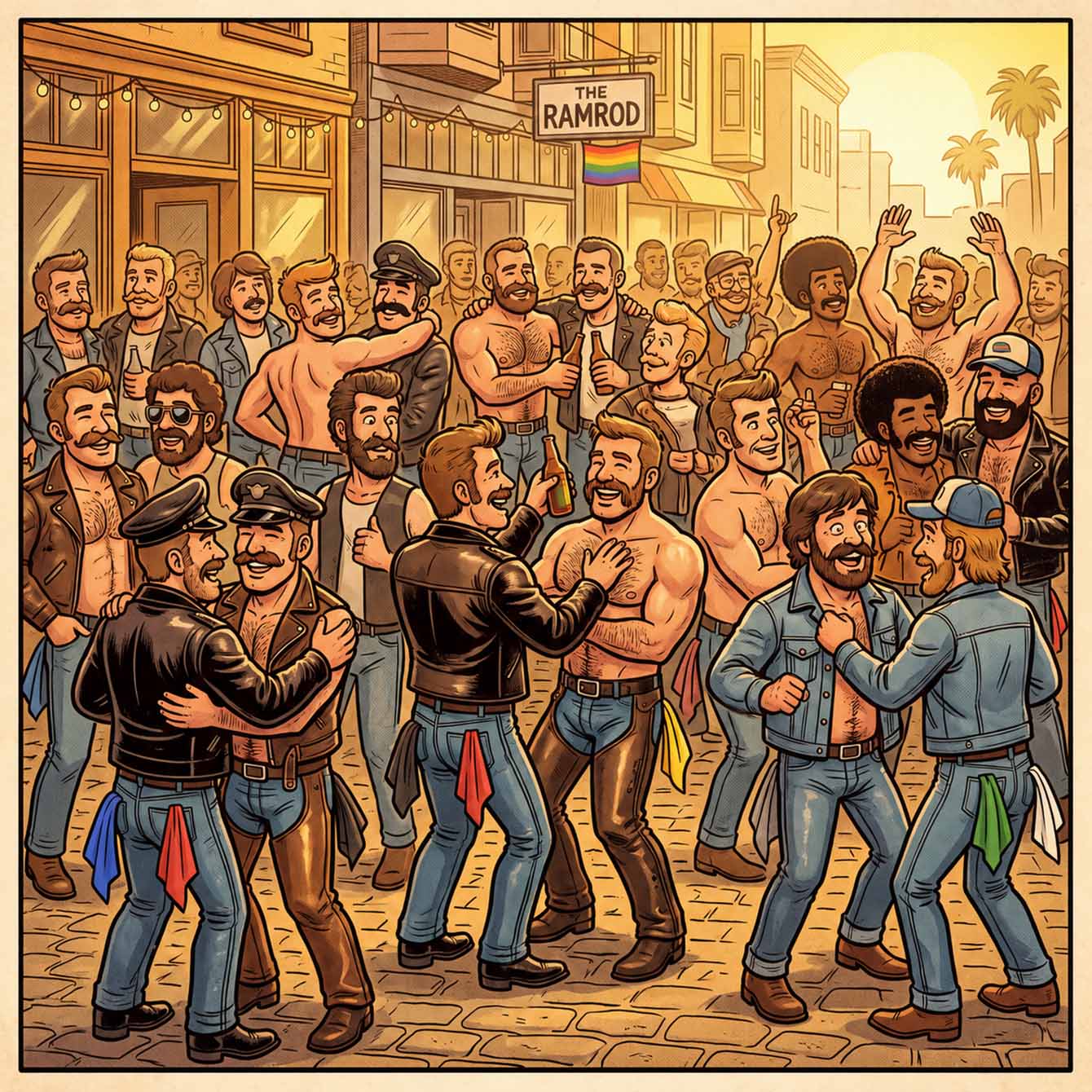
The hanky code — also known as flagging — became popular during the 70s, particularly in gay leather and cruising scenes.
The basic system was simple: the colour represented a sexual interest or fetish, while the side on which the hanky was worn usually indicated the preferred role.
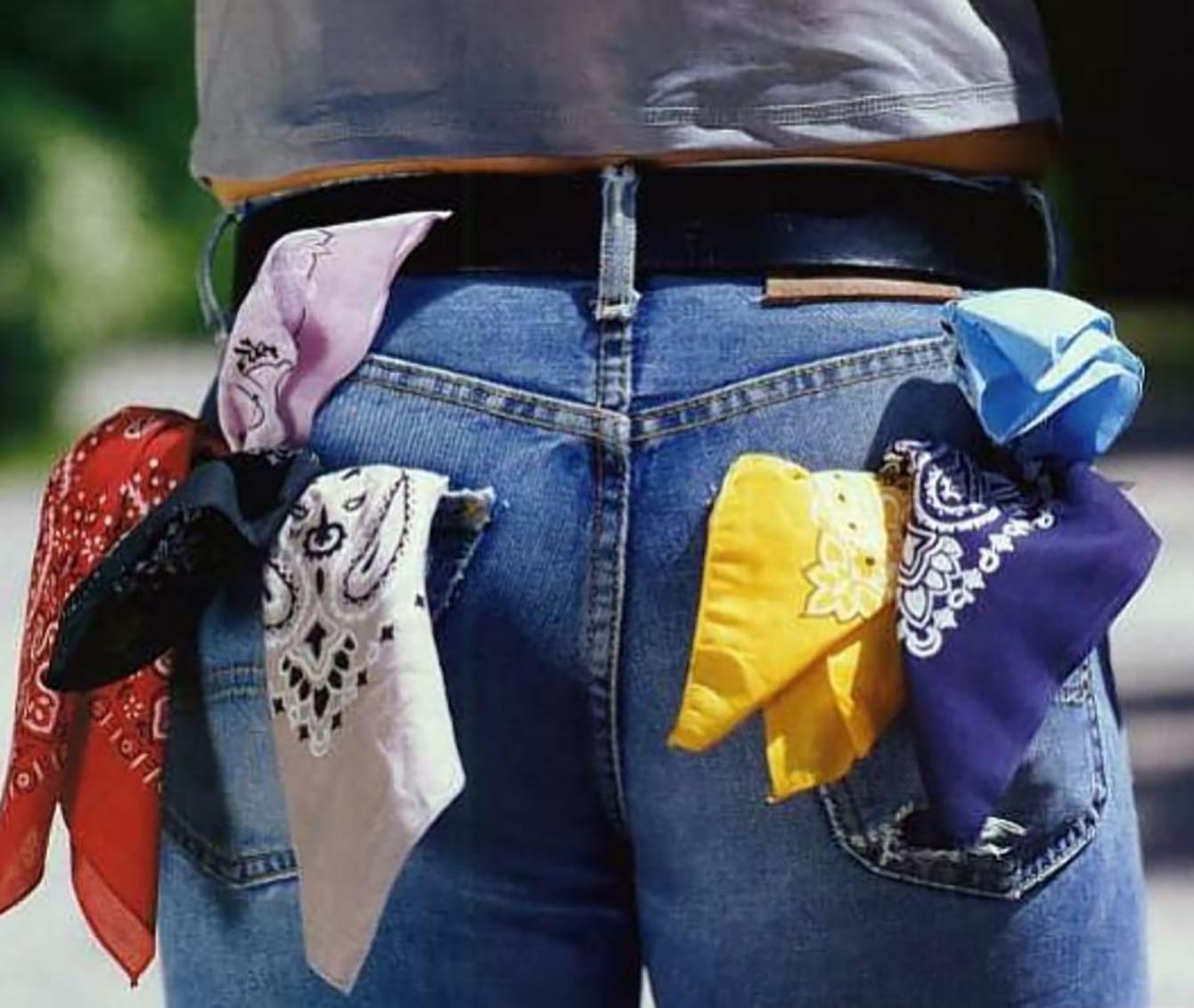
A coloured handkerchief hanging from a back pocket could indicate what someone liked and which role he preferred. In this case, we have a very versatile man who likes many things. 😉 Photo by Muzzlesf / Wikimedia Commons (CC0 1.0)
A hanky on the left generally meant active, dominant or top. One on the right usually meant passive, submissive or bottom.
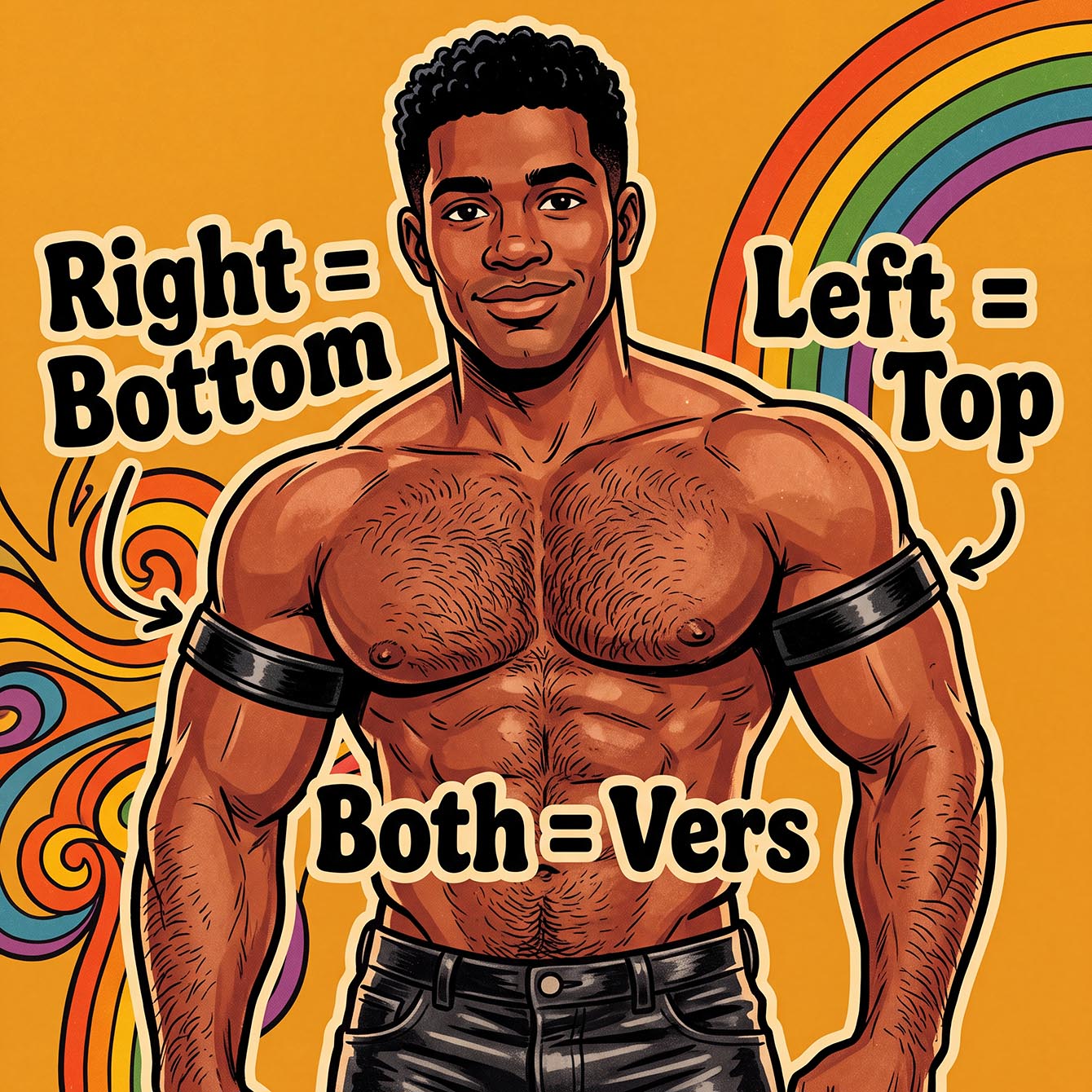
The modern variation: no hanky codes, just wristbands. The same color codes apply, and they can be worn on either the left or right wrist.
Basically, it was a dating profile you could wear on your ass.
No typing. No scrolling. No waiting for a reply.
But let’s face it, telling the difference between navy and dark blue in a dark room isn’t exactly the easiest thing. 😂
Who Invented the Hanky Code?
Nobody knows for certain.
One version places its beginnings in New York around 1970 or 1971. According to this story, a journalist from The Village Voice joked that gay men should use coloured handkerchiefs instead of wearing keys on different sides of their jeans to show whether they were tops or bottoms.

Alan Selby, known as “”the Mayor of Folsom Street” at the Mr. S Leather store in San Francisco, circa 1980. Photo by Alexander V. Areno, courtesy of Gayle Rubin / GLBT Historical Society
Leather-community figure Alan Selby also claimed that he and his business partners helped develop an early version after accidentally receiving too many bandanas and needing a creative way to sell them.
Another theory credits The Trading Post, an erotic shop in San Francisco, with printing cards that explained the meanings of different colours.
So the hanky code may have started as gay ingenuity, a journalist’s joke or an excellent solution to excess stock.
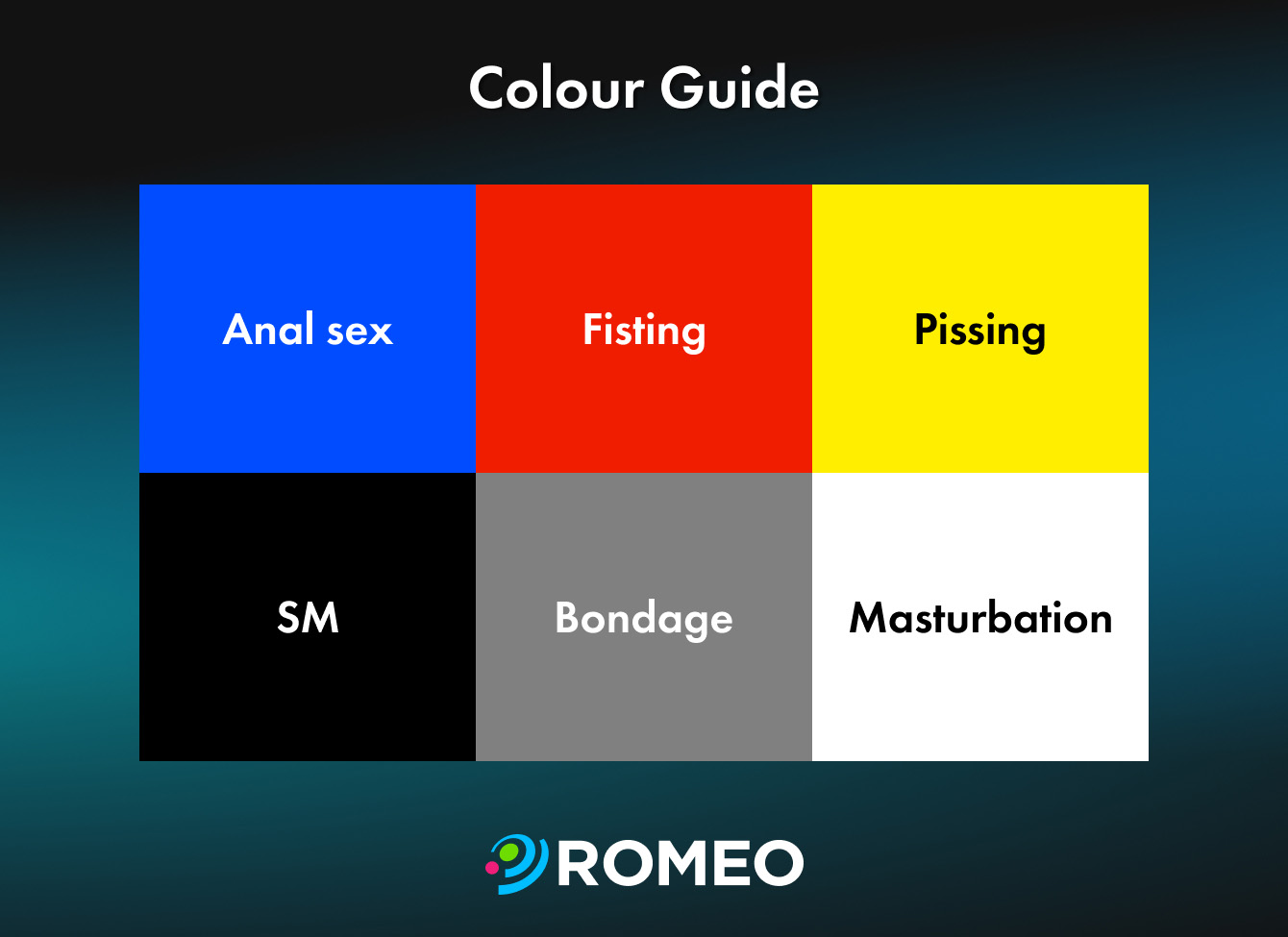
An overview of the most classic hanky codes, based on our personal experiences. You can find many variants online, including even more colours. ✨
By 1980, a hanky colour chart appeared in Bob Damron’s Address Book, a pocket-sized guide that helped gay men find bars, bathhouses, cruising areas and other queer-friendly places while travelling.
Long before an app could show you who was nearby, gay men were already carrying that information in their pockets. Literally.
From Back Pockets to Dating Profiles
Dating apps may have made the hanky code less common, but it never completely disappeared. Hankies are still used in some leather, fetish and cruising spaces, while also appearing in queer fashion, art and Pride as references to gay history.
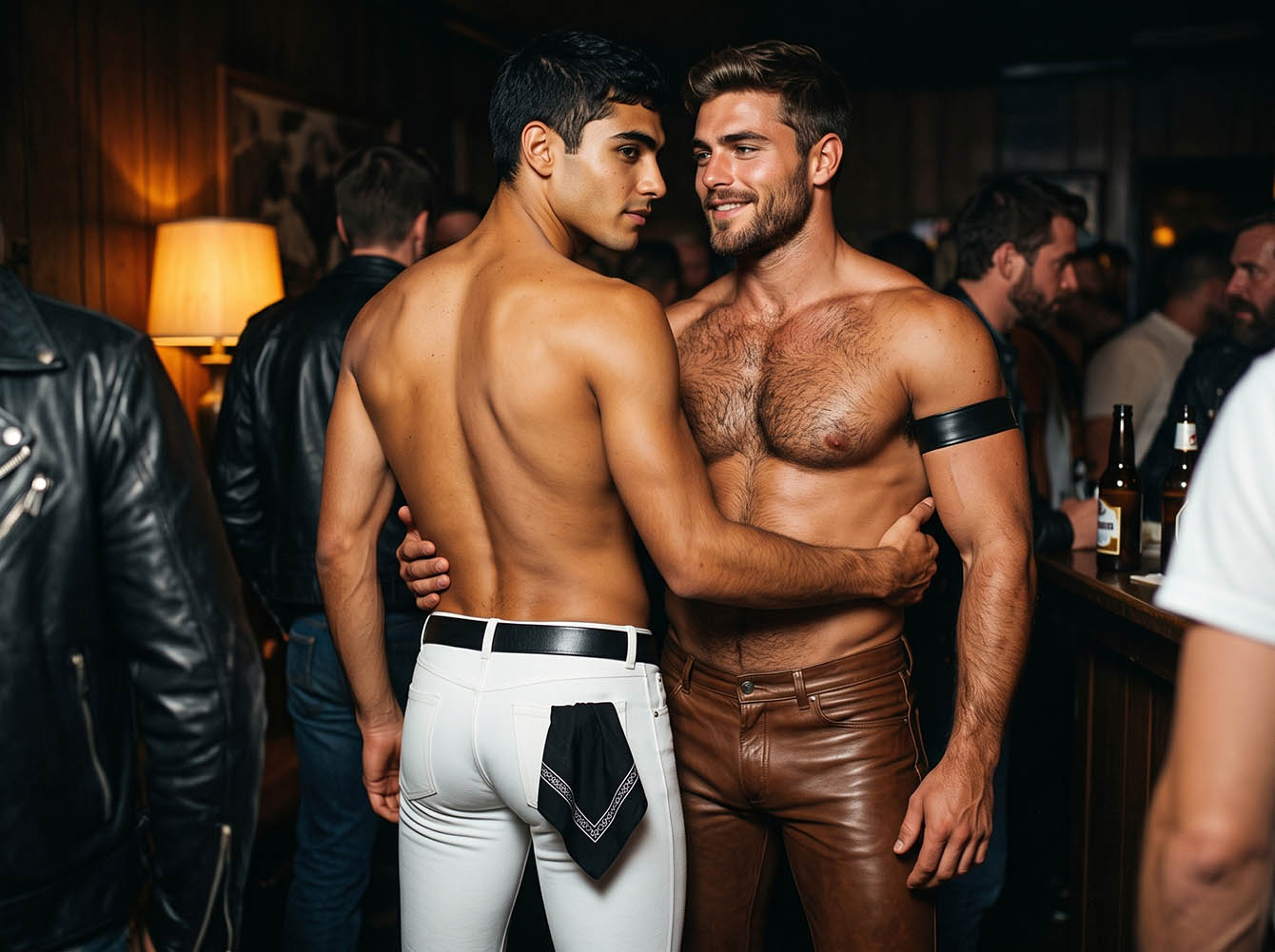
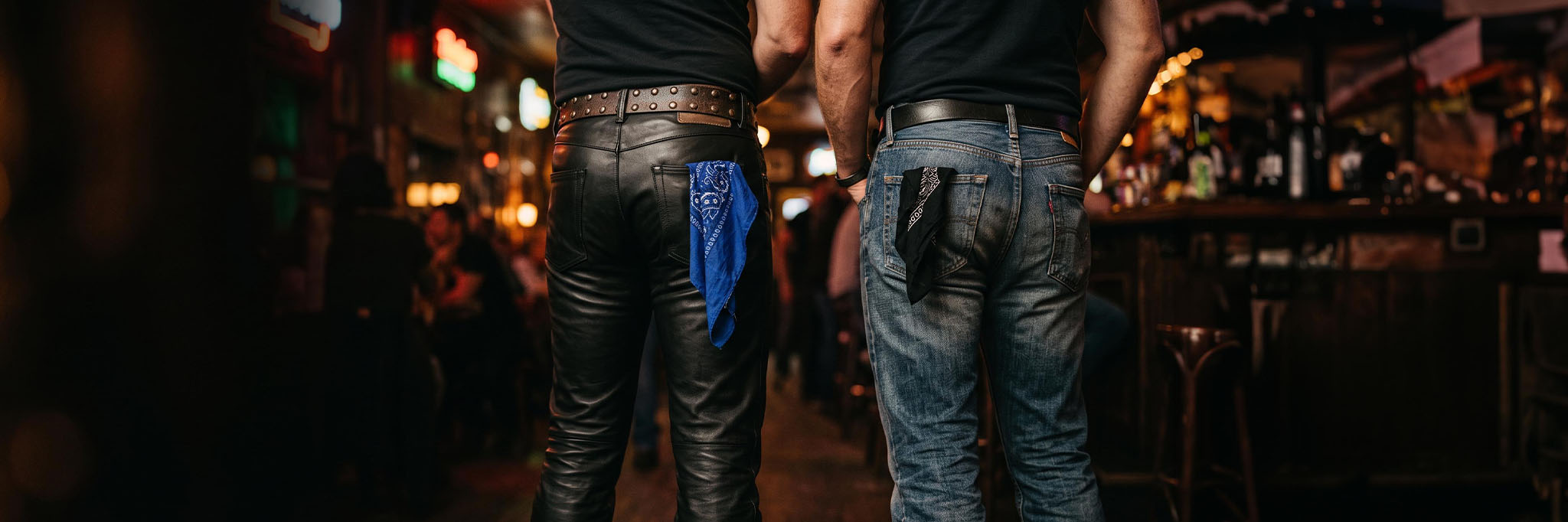
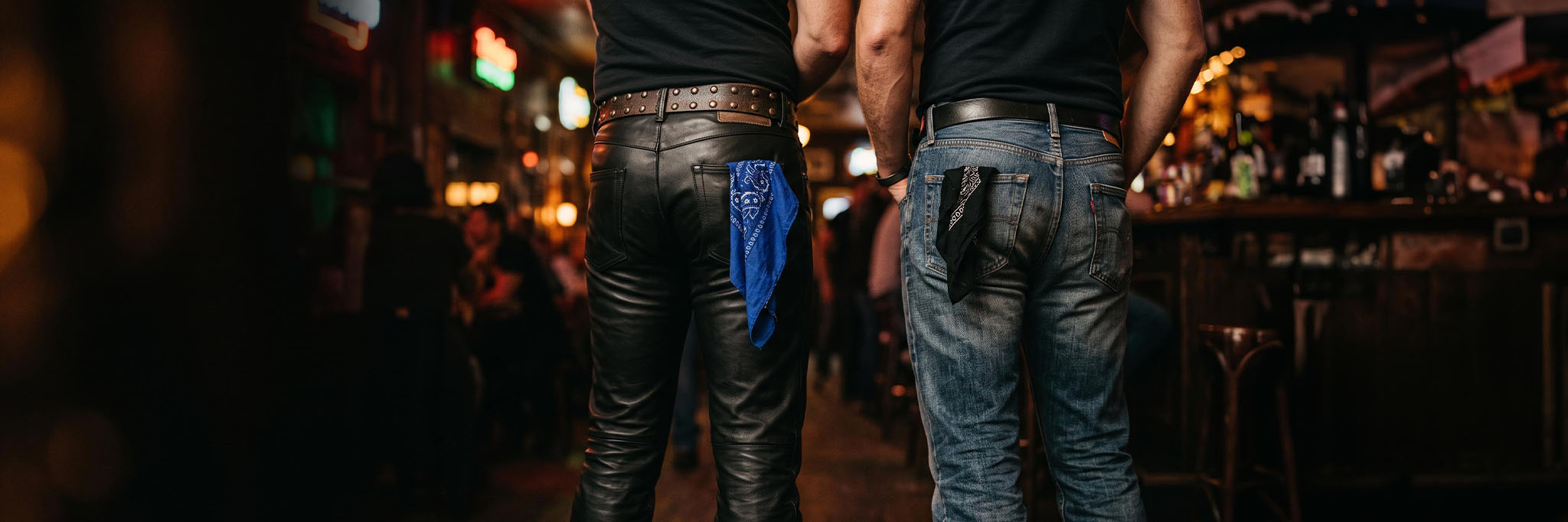
Little quiz: what are the two gentlemen when you meet them on the street? Answer at the very end.
Profiles, interests, filters and messages now let us communicate far more clearly, but they evolved the same basic idea: showing who we are, what we like and who we hope to meet.
The hanky code was playful, confident and direct — a reminder that the rainbow community have always found creative ways to recognise one another. The tools have changed, but the question remains the same:
Are you looking for what I’m looking for?
Fortunately, you no longer need to memorise an entire rainbow to find out.
Your colour-coordinated ROMEO Team 🌈
(Answer: they are both into SM, Julio is the top and Romeo the bottom 🖤)