


Every year, for LGBTQ History Month, we look back at someone who left a mark on queer history. This time, we chose an artist whose work perfectly captured his era — and somehow still feels completely current.
Keith Haring.
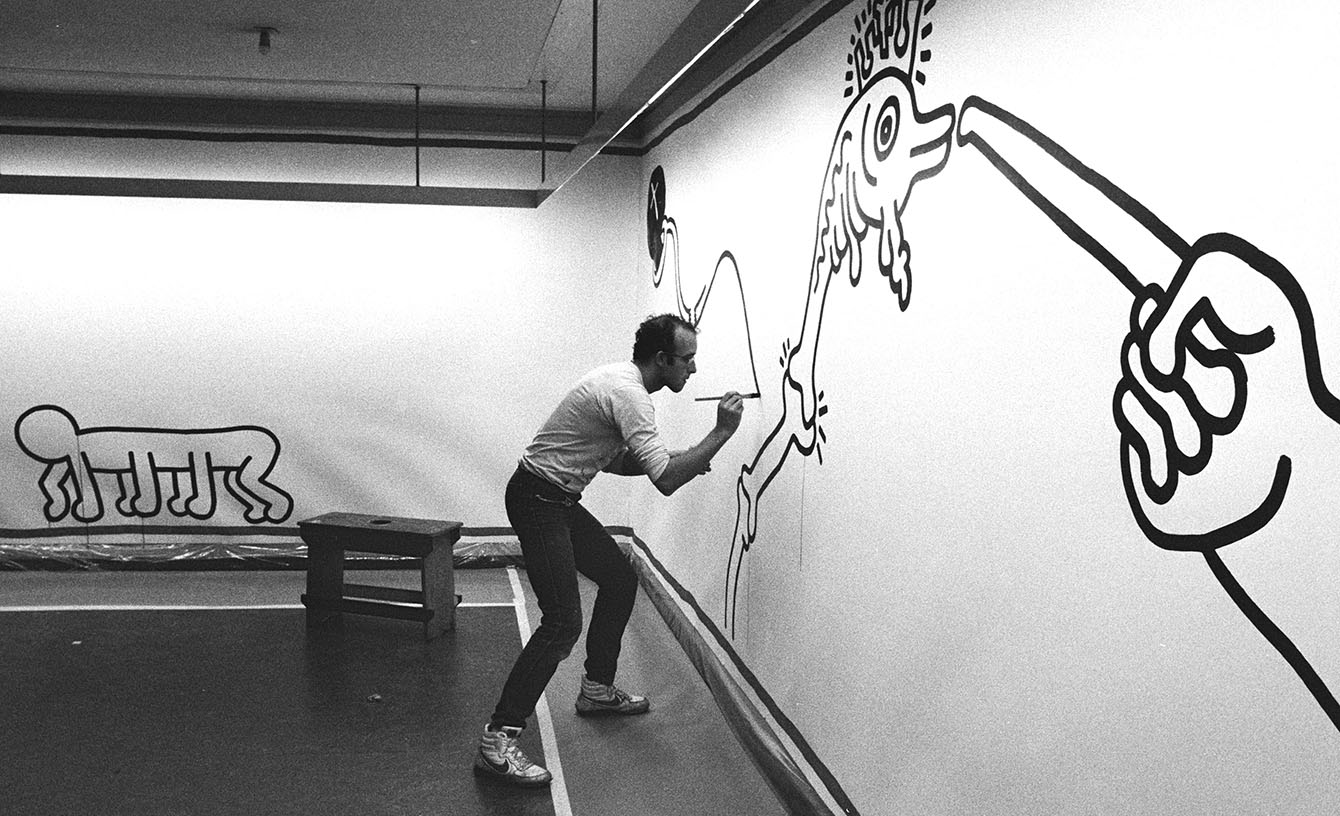
Keith Haring at work at the Stedelijk Museum in Amsterdam, 1986. Photo: Rob Bogaerts / Nationaal Archief, CC0.
You’ve seen his figures. Dancing, hugging, crawling, reaching for each other. Barking dogs. Big hearts. Thick black lines buzzing with energy.
Maybe in a museum, or on a wall. Maybe on a T-shirt you bought simply because you liked it.
Haring was openly gay, and the queer world around him naturally found its way into his work: sex, desire, nightlife and plenty of bodies.
But those same simple lines could also say something much heavier. Haring used them to address racism, apartheid, drugs, homophobia, violence and AIDS.
That contrast was part of what made his work so powerful. It could be bright, playful and immediately understandable, while carrying much bigger ideas underneath.
More than three decades after his death, his art is still everywhere. And somehow, it still feels just as alive.
Made To Be Seen
When Haring moved to New York in 1978, he found a city full of artists, music, clubs, graffiti and people making their own rules.
He soon found his canvas too: the subway.
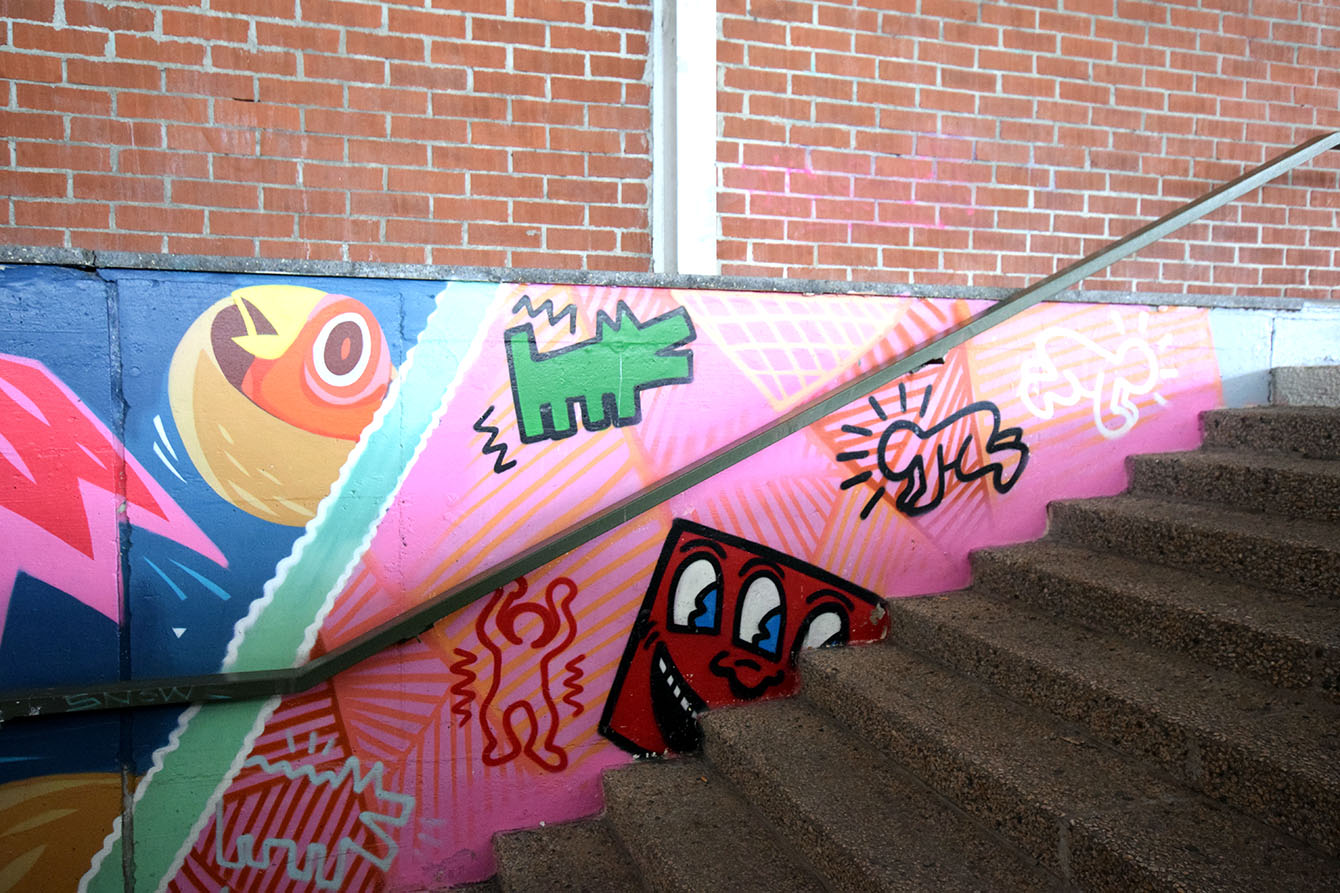
Haring’s influence lives on: contemporary graffiti at Mehrower Allee S-Bahn station in Berlin-Marzahn echoes his unmistakable visual language. Photo: Singlespeedfahrer / Wikimedia Commons, CC0.
Empty advertising spaces were covered with black paper, and Haring started filling them with white chalk drawings. Commuters watched him work. People recognised the characters. Sometimes the police noticed too.
And that was exactly the point.
Haring didn’t want art to live only inside galleries, waiting for people to come and find it.
He wanted art to find them.
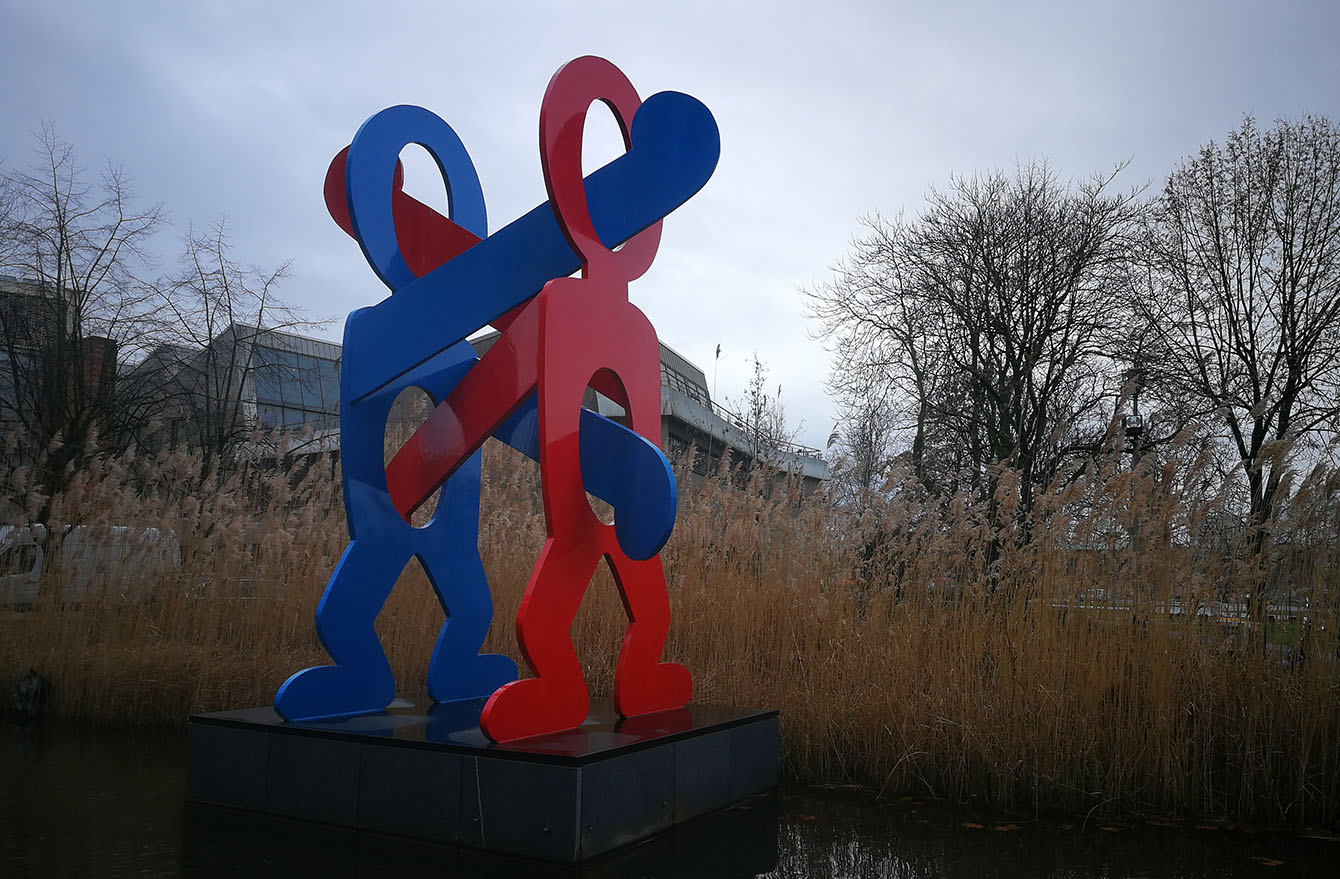
Keith Haring’s The Boxers (1987), on display at Potsdamer Platz in Berlin. Photo: art_inthecity / Wikimedia Commons, CC BY 2.0.
And the figures he created were perfect for that. Simple bodies, usually without obvious age, race or gender. You didn’t need to know who they were to understand what they were doing.
Dancing. Touching. Kissing. Loving.
Art To Wear
As Haring became famous, however, his art became expensive.
So in 1986, Haring opened the Pop Shop in New York, selling T-shirts, posters, buttons and other affordable objects covered in his designs.
Some critics thought it was too commercial. Haring disagreed.
For him, putting a drawing on a T-shirt was another way of keeping art accessible. The subway had brought his work to commuters. Now people could take it home — or wear it.

A little Haring in the ROMEO wardrobe — decades later, his figures are still part of everyday life.
And clearly, the idea lasted.
His figures are still everywhere today: on clothes, bags, trainers, walls and countless collaborations.
Sometimes the art even reaches people before the artist does.
The person writing this bought a Haring T-shirt many years ago without knowing anything about him. Two simple figures beneath a big heart. The image just felt familiar, peaceful and full of love.
Only later came the name and the story behind it.
Which, in a way, proves his point.
A Legacy In Motion
The AIDS crisis eventually became deeply personal for Haring, who was diagnosed in 1988. He used his work to challenge fear and silence around HIV and, a year later, created the Keith Haring Foundation.
He died of AIDS-related complications in 1990, aged just 31.
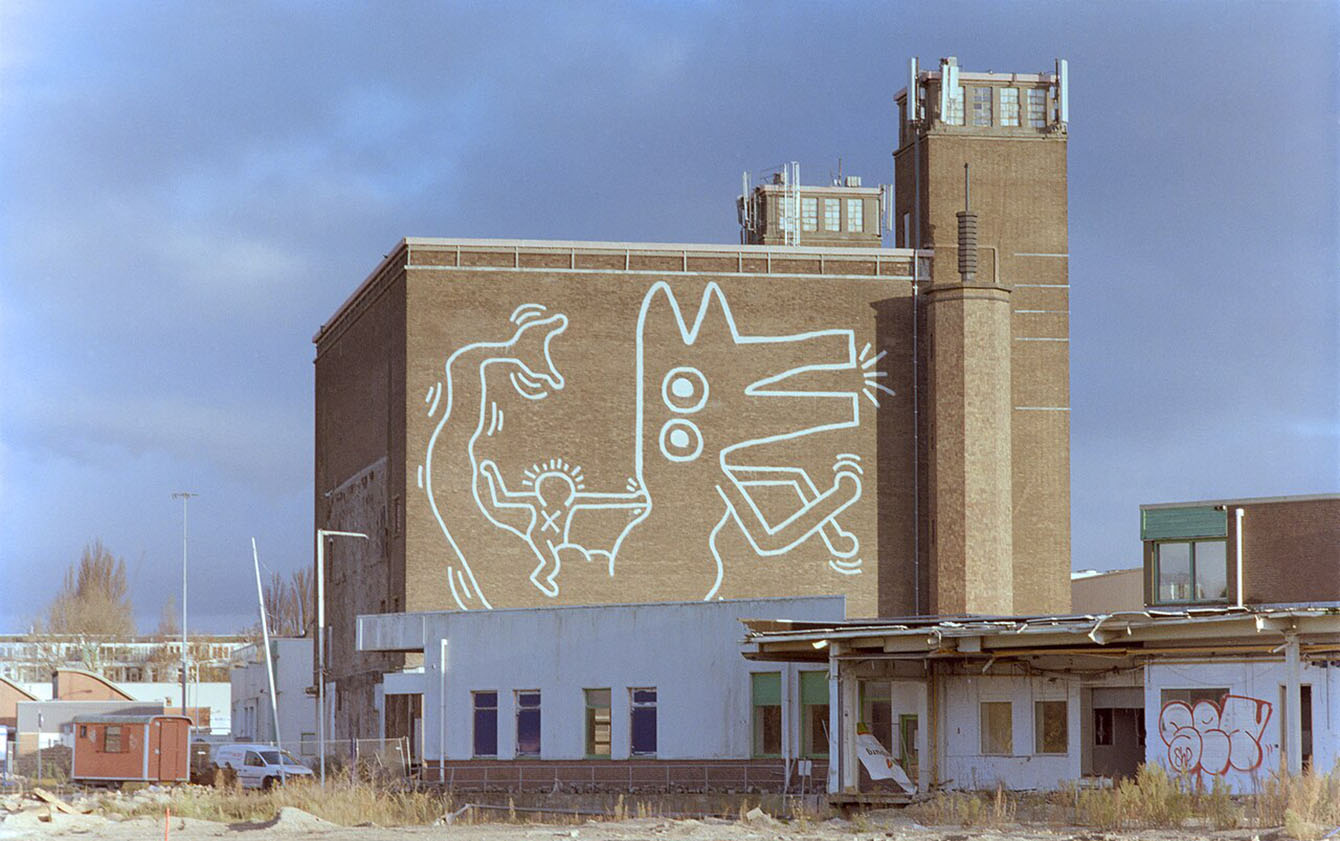
Still out in the open: Keith Haring’s 1986 Amsterdam mural, visible from Willem de Zwijgerlaan. Photo: Frank Markesteijn / Wikimedia Commons, CC BY-SA 4.0.
His career lasted little more than a decade. His legacy proved much harder to contain.
The figures kept moving — across museum walls, city streets, clothes, posters and collaborations around the world. More than three decades later, Haring’s work is still instantly recognisable, even to people who may know little about the man behind it.
Perhaps that is what makes his legacy so powerful and timeless.
He created art that was queer, political, sexual and joyful, but also open enough for almost anyone to connect with.
It belonged to his world.
And somehow, it still belongs to ours.