


Every year on King’s Day, the Netherlands turns orange to celebrate royalty — crowns, canals, and a nation dressed like one big, very well-organised street party. It’s all about tradition, legacy… and a very straight-looking version of history.

Drunken straight people in orange with pride vibes 🎉 (Photo by Abhay Rautela on Unsplash)
But let’s be honest: royalty has never been that straight.And if you go back even further — beyond European courts, beyond modern labels — you’ll find stories that are even wilder. 😀
Pharaoh Pepi II
One of the very first (somewhat) documented gay kings we can trace back to Ancient Egypt: Pepi II (c. 2296–2184 BC), who is believed to have ruled for 90+ years.
Such an extraordinarily long life is, of course, still heavily debated. Nevertheless, it is widely accepted that he lived to an exceptional old age. He became ruler at just six years old, and his reign may have lasted up to 90 years — one of the longest in history.
He was the last pharaoh to build a monumental pyramid and the last ruler of the Old Kingdom.
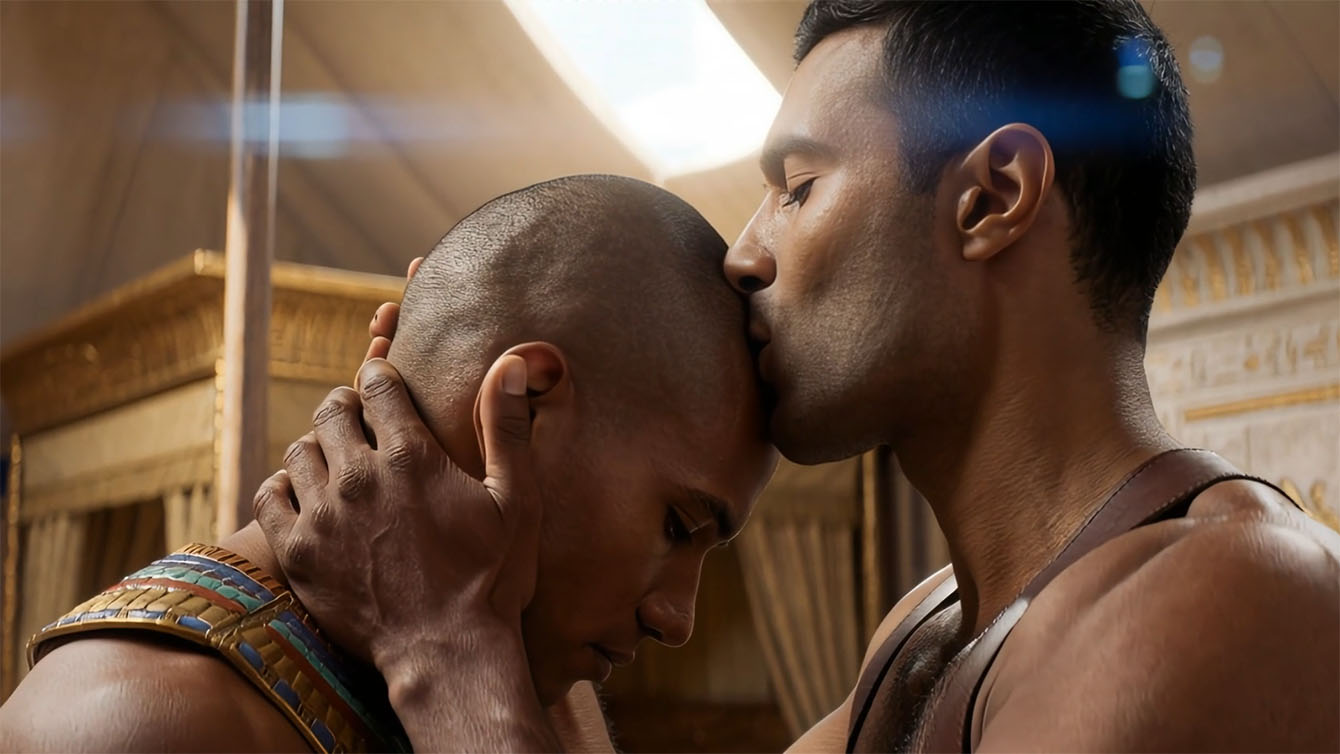
Beyond giving us a great excuse to show some hot, lightly dressed Egyptian men, Pepi II is a fascinating figure in history.
Imagine this: you are worshipped as a god… and at the same time secretly in love with one of your generals.
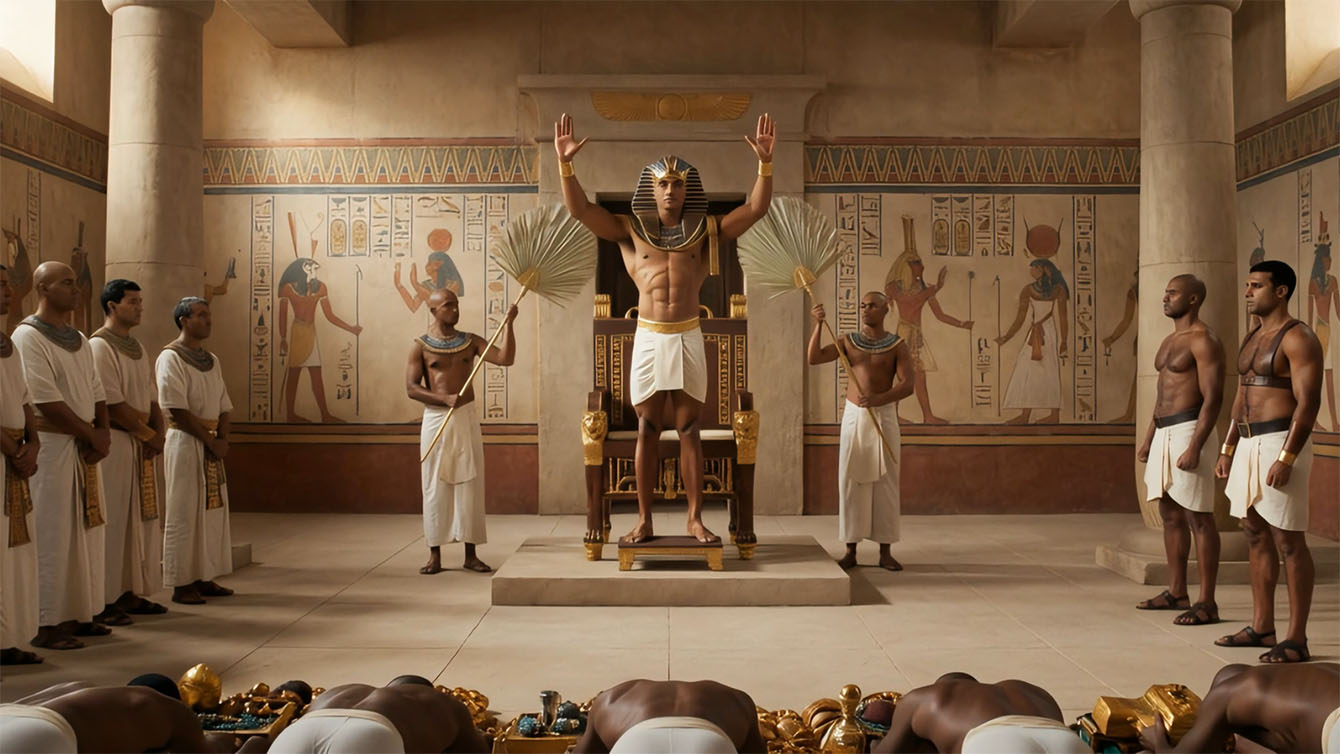
By the end of his rule, Egypt had fallen into decline and chaos. Later sources, unsurprisingly, blamed this on his “immorality” and alleged homosexuality.

The famous Pyramids of Giza once reached 146.6 meters in height (today about 138 m). They were built around 2600 BC — roughly 300 years before Pepi II. (Photo by Osama Elsayed on Unsplash)
In reality, the reasons were far more complex. Climate change made the region drier, leading to economic decline and instability. It’s worth remembering: the pyramids were once surrounded by greener landscapes — not the desert we imagine today.
At the same time, Pepi II may be a good reminder that ruling for too long rarely ends well — in any era. But let’s be honest, what we really love are the stories:

A powerful pharaoh sneaks out of his palace at night, alone, … visiting his general Sarsenet, climbing up to his balcony, and spending the night together.
Feels a bit like Romeo, doesn’t it? 🙂
From Palace Secrets to Public Pride
Fast forward to today, and the royal closet is… cracking open. Slowly.
In the UK, Lord Ivar Mountbatten made headlines with the first same-sex wedding in the extended royal family — and yes, his ex-wife gave him away (iconic behaviour, honestly). In India, Prince Manvendra Singh Gohil didn’t just come out — he turned his palace into a safe haven for LGBTQ+ people.
Still, let’s not pretend every palace is waving a rainbow flag just yet. Many monarchies remain rooted in old expectations — heirs, image, and heteronormative fairy tales.
Here in the Netherlands, as of 2021, members of the Dutch royal family can enter into same-sex marriages without losing the right to the throne, marking a significant shift in history.
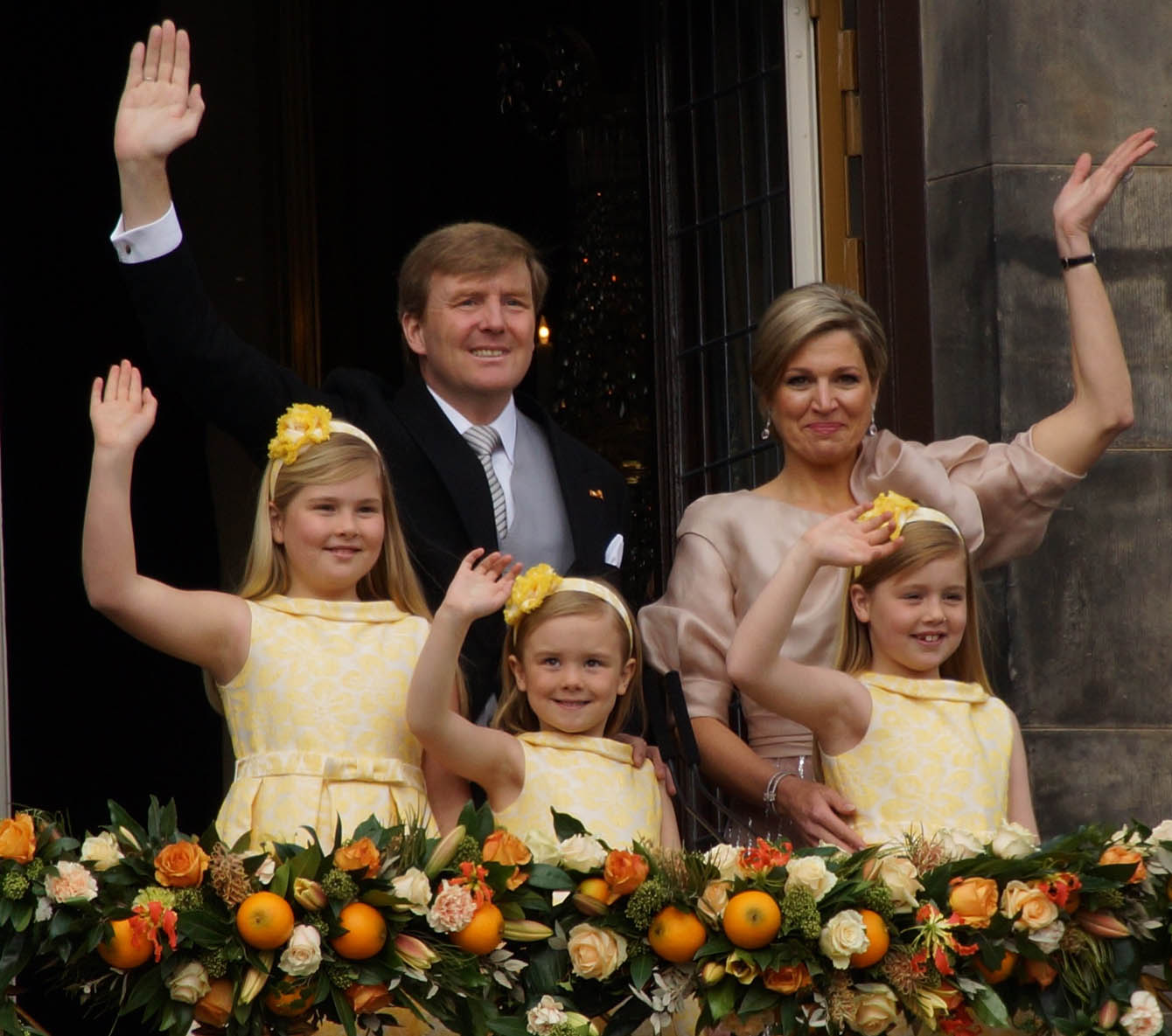
The Dutch royal family back in 2013, photo by Floris Looijesteijn via Wikimedia Commons (CC BY 2.0). Biggest drama – no Prince! 😞
But history doesn’t lie: queer people have always been there. In the courts, in the shadows, in the scandals — and sometimes, right next to the throne.
Now, they’re just a little harder to ignore.
So this King’s Day, as we celebrate King Willem-Alexander and turn the country orange, it’s worth remembering: royal courts have always had a little rainbow too.
Yours royally,
ROMEO 👑🧡